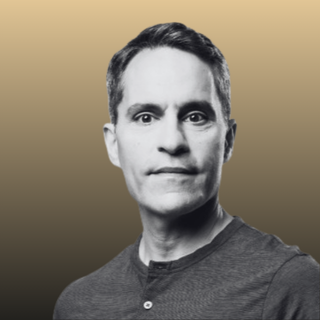
Dennis Hoffman
Operating Partner at Techquity, advising CEOs, boards, and private equity firms on technology judgment. Founder of The Retirement Strategy, an AI-assisted planning tool built around the non-financial dimensions of retirement.
About Dennis
Dennis Hoffman's career began with a fairly ordinary push: a high school guidance counselor told him he was good at math and science, so he studied electrical engineering. Within a year of working as an engineer, he did the math on a standard corporate pay-grade matrix and realized where that path led. He started an MBA at night at Babson College, but a colleague who had watched night-school graduates return to work unchanged convinced him the credential itself wasn't the point; the institution behind it was. He applied to Harvard Business School, the only school he applied to, and got in.
After HBS, Dennis went into strategy consulting and again hit the same wall, this time because the lifestyle left no room for anything else. He moved into an operating role running a storage division at Avid Technology, where he learned that no amount of talent or effort can outrun bad industry economics. That lesson pushed him, along with a few colleagues, to found a company in May 2000, one month after the NASDAQ crash. He ran it as first-time CEO through three brutal years of the dot-com collapse, watched strategic investors go bankrupt around him, and sold the company to EMC in 2003 for a fraction of what it might once have been worth, just months before his twin children were born.
That experience became the armor for the next chapter. He joined EMC believing that nothing the company could throw at him would be harder than what he'd just survived, and that he didn't need to prove he belonged there, only be himself. Under mentors including Howard Elias and CEO Joe Tucci, he became a kind of internal fixer, taking on one "figure it out" assignment after another: shaping EMC's cybersecurity strategy on the way to the RSA acquisition, and later helping stand up VCE, a joint venture with Cisco and VMware. He came to think of most roles as a mix of three components, figuring something out, setting it up, and doing it, and he learned that he needed to keep moving across all three rather than settling permanently into any one of them.
When Michael Dell and Silver Lake acquired EMC in 2016, Dennis spent his first four years helping run corporate strategy through a period of major capital and corporate restructuring, including Pivotal's IPO and its later merger back into VMware. He spent his last six years building a fledgling 5G edge telecom division inside Dell almost from scratch. In total, he spent 22 years at EMC and Dell, working remotely from Wyoming since 2016 even as the roles themselves kept changing underneath him.
A health scare at 59, an unexpected open-heart surgery to repair a failed valve, along with his twins finishing college, pushed him to start thinking seriously about what came next. He noticed that many peers who retired with plenty of money weren't happy, and that the advice available online was almost entirely about finance. Drawing on research into longevity, purpose, and social connection, he built a framework describing retirement happiness as a house: health and wealth as the foundation, people and place as the walls, and purpose as the roof. That framework became The Retirement Strategy, an AI-assisted tool that has now walked several hundred people through the same set of questions he asked himself. Rather than stepping away from work entirely, he has also joined Anthony Bay at Techquity, choosing to keep solving business problems on his own terms instead of ending his career the day his last full-time job did.
Key Achievements